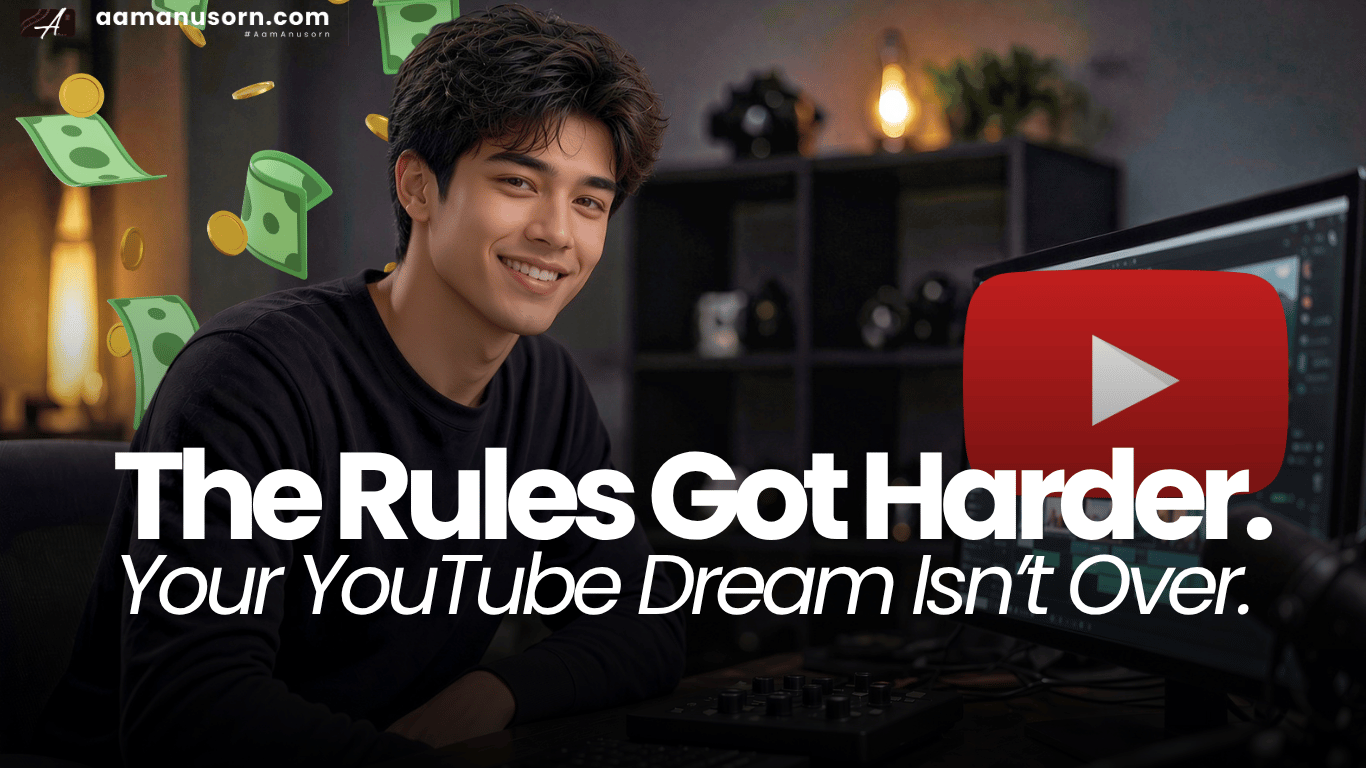

If you are searching for “Can I still become a YouTuber in 2027?” after seeing YouTube raise its monetization requirements from 4,000 to 8,000 watch hours and from 10 million to 20 million Shorts views, here is the short answer: yes, you still can — and if you are thinking about starting a channel, we actually think you should start now instead of waiting for 2027.
The new rules do not take effect immediately, and they do not affect every creator in the same way. Starting February 1, 2027, new applicants to the YouTube Partner Program, or YPP, who want to earn revenue from ads and YouTube Premium will need at least 1,000 subscribers plus 8,000 qualified watch hours within 365 days or 20 million qualified Shorts views within 90 days. Creators who are already in YPP will not have their existing membership status retroactively subjected to the new entry threshold.
YouTube Partner Program — 2027
8,000 Watch Hours + 20 Million Shorts Views
Does that sound brutal? Absolutely. Twenty million Shorts views within 90 days sounds especially insane. We saw that number and thought the same thing: “Who the hell is going to do that?”
But before you give up, you need to separate the rules that apply right now from the rules that begin in 2027 — and from the headlines on the internet that often leave out half of the story.
Quick Summary of the YouTube 2027 Rules
If you do not want to read every detail yet, these are the numbers you need to know:
- Right now in 2026: 1,000 subscribers + 4,000 qualified watch hours within 12 months or 10 million qualified Shorts views within 90 days.
- Starting February 1, 2027 for new YPP applicants: 1,000 subscribers + 8,000 qualified watch hours within 365 days or 20 million qualified Shorts views within 90 days.
- If you are already in YPP: YouTube says existing YPP membership is not affected by the increased entry threshold.
- The 500-subscriber entry level still exists: it remains available for certain monetization features, including fan-funding and Shopping features in countries where the expanded YPP is available. Google Help
So when someone says “YouTube has already increased the requirement to 8,000 watch hours,” without explaining anything else, that is only part of the story.
YouTube Still Requires 4,000 Watch Hours and 10 Million Shorts Views Right Now
In 2026, creators who want to join YPP and receive revenue sharing from ads and YouTube Premium still need 1,000 subscribers plus 4,000 qualified public watch hours from long-form videos within 12 months, or 10 million qualified Shorts views within 90 days. Google Help
Another important detail is that watch time generated inside the Shorts Feed does not count toward the long-form watch-hour requirement. YouTube treats the long-form and Shorts eligibility routes separately. Google Help
If you are building your channel in 2026 and your goal is to qualify for YPP before the new threshold takes effect, this is not the time to sit around waiting.
This is the time to start.
When Does the 8,000-Hour YouTube Rule Begin?
YouTube has confirmed that starting February 1, 2027, the YPP entry requirements for new creators seeking ad and Premium revenue will increase to:
- At least 1,000 subscribers
- 8,000 qualified watch hours within 365 days
- OR
- 20 million qualified Shorts views within 90 days
YouTube also says that creators who are already members of YPP will not lose their existing membership simply because the entry threshold has increased. Google Help
This distinction matters. There is a huge difference between saying “YouTube is making everyone reach 8,000 hours” and saying “YouTube is increasing the YPP entry threshold for new applicants beginning in February 2027.”
What About the 500-Subscriber YPP Requirement?
It is not disappearing.
In countries and regions where the expanded YouTube Partner Program is available, including Thailand, creators can access certain monetization features before reaching the full advertising-revenue threshold.
- 500 subscribers
- At least 3 eligible public uploads within 90 days
- 3,000 qualified watch hours within 12 months
- OR
- 3 million qualified Shorts views within 90 days
This level primarily unlocks certain fan-funding and Shopping features rather than full advertising revenue sharing. Google Help
YouTube also states that the eligibility requirements for fan funding, YouTube Creator Partnerships and YouTube Shopping are not being increased to 8,000 hours or 20 million Shorts views. Google Help
20 Million Shorts Views Does Not Mean You Need 20 Million Every 90 Days Forever
Another distinction worth understanding is that 20 million Shorts views is the entry requirement for new creators who choose the Shorts route into YPP beginning in February 2027.
After entering YPP, YouTube has announced a separate threshold related to Shorts Creator Pool revenue. Creators will need at least 10 million qualified Shorts views during the previous 90 days to receive Shorts Creator Pool revenue for that month.
If the channel falls below that threshold, YouTube says it will not automatically be removed from YPP, and other revenue streams such as long-form monetization are not affected by that Shorts-specific requirement. Google Help
That is why the 20-million-view number looks very different once you read the full announcement instead of only the headline.
8,000 Watch Hours Sounds Scary, but Becoming a YouTuber Is Still Possible
We look at this rule from another angle. Competition on YouTube keeps getting harder. Opening a channel, uploading whatever you feel like, disappearing for three months, returning with another random video and hoping the algorithm magically sends an audience may become even less effective than it already is.
But a higher monetization threshold does not mean ordinary creators can no longer build channels. It means creators who genuinely want to make money from YouTube need to become more serious about content strategy, search intent, audience retention, thumbnails, topic selection and analytics.
We are not saying this purely from theory.
Our company channel once had approximately 7 million total views before growing to around 108 million views over roughly two years.
That did not happen because we sat around waiting for one viral video to suddenly change everything.
What changed was that we started using more data. We looked at what people were searching for, which subjects had demand, what competing channels were doing, which of our videos were working, which ones were not — and, just as importantly, what we needed to stop doing.
If you are serious about becoming a YouTuber, there are two tools we use and recommend.
Affiliate Disclosure: This article contains affiliate links. If you sign up for a service or make a purchase through one of our links, we may receive a commission at no additional cost to you.
1. vidIQ — If You Are Serious About YouTube, Stop Guessing and Start Using Data
The first tool we recommend is vidIQ.
We are not recommending it because we think there is some magical button that instantly turns a video into a million-view hit. That tool does not exist.
What we like about vidIQ is simple: it helps reduce the amount of guessing.
YouTube Studio already gives creators a lot of useful information, and we use it all the time. But Studio mainly shows what is happening inside your own channel.
When you are actually trying to grow on YouTube, you also need to look outside your channel. What are people searching for? Which competitors are growing? Which topics are becoming crowded? Where are the gaps that your channel could realistically fill?
What Can vidIQ Help With?
- Keyword Research — explore keyword ideas, estimated search volume and competition.
- Competitor Analysis — compare views, subscribers, top-performing videos and views per hour.
- Channel Audit — identify what is working on your channel and where improvements may be needed.
- Video Ideas — discover possible topics based on your niche.
- AI Coach — use channel context and data to help analyze potential strategies.
- Title and Description Tools
- Script Generator
- Thumbnail Maker
- Trend Alerts
- Outlier Research — identify videos that perform significantly above the normal range for a channel or niche.
These tools are currently available across vidIQ's feature set, although access varies depending on the individual feature and subscription plan. vidIQ
Sometimes New YouTubers Do Not Have a Video Problem — They Have a Topic Problem
This is something we really want to emphasize. Someone can spend three days editing a beautiful video. The thumbnail looks great. The audio sounds good. The editing is polished.
Then the video gets 42 views and suddenly they think, “The algorithm hates me.”
Sometimes the algorithm does not hate you at all.
You simply chose a topic nobody wanted to watch.
Keyword research and competitor research are not useful only for “YouTube SEO.” They can help answer one of the most important questions before you even turn on the camera: Does this video have a strong enough reason to exist?
2. Epidemic Sound — If You Want to Make Money, Do Not Ignore Music Copyright
Another subject every serious content creator needs to understand from day one is copyright.
It may not be as exciting as brainstorming content or designing thumbnails, but copyright issues can have a very real impact on your channel's revenue.
YouTube uses Content ID to scan uploaded audio and video against reference material supplied by copyright owners. When a match is detected, a Content ID claim may be placed on the video. Depending on the rights holder's settings, the video may be monetized by the rights holder, tracked or blocked. Google Help
That is why going to Google, typing “copyright free music,” downloading a random track and dropping it into your video is not a workflow we recommend.
YouTube itself warns that even music labeled “free” online can still be detected by Content ID. What really matters is whether you actually have the appropriate rights and license to use that music. Google Help
Why We Use Epidemic Sound
Epidemic Sound currently states that its catalog contains more than 55,000 music tracks and more than 250,000 sound effects, spanning hundreds of genres, with instrumental versions and stems available across its catalog. Epidemic Sound
Its search tools can also filter music by genre, mood, length, tempo and vocal or instrumental characteristics. Semantic Search allows users to describe the kind of music they are looking for using natural language. Epidemic Sound
Stems Are One of Our Favorite Features
Imagine finding a track you love, but you do not want the entire arrangement in a particular scene. Maybe all you need is the piano, drums or another individual element.
When stems are available, individual musical elements can be used separately. That gives editors much more flexibility to adapt one track to the mood, pacing and rhythm of a scene instead of being locked into a single finished mix.
For filmmakers, editors, YouTubers and content creators, features like this can save a huge amount of time when trying to find sound that actually matches the emotional tone of a project.
Need licensed music and sound effects for your content?
Try Epidemic Sound through our affiliate link.
Try Epidemic SoundStarting a YouTube Channel? You Do Not Need to Buy Everything at Once
One thing we do not recommend is looking at the setup of a huge YouTuber and assuming you need an expensive camera, lenses, microphone, lights and every other piece of equipment before you are allowed to start.
Start with what your content actually needs.
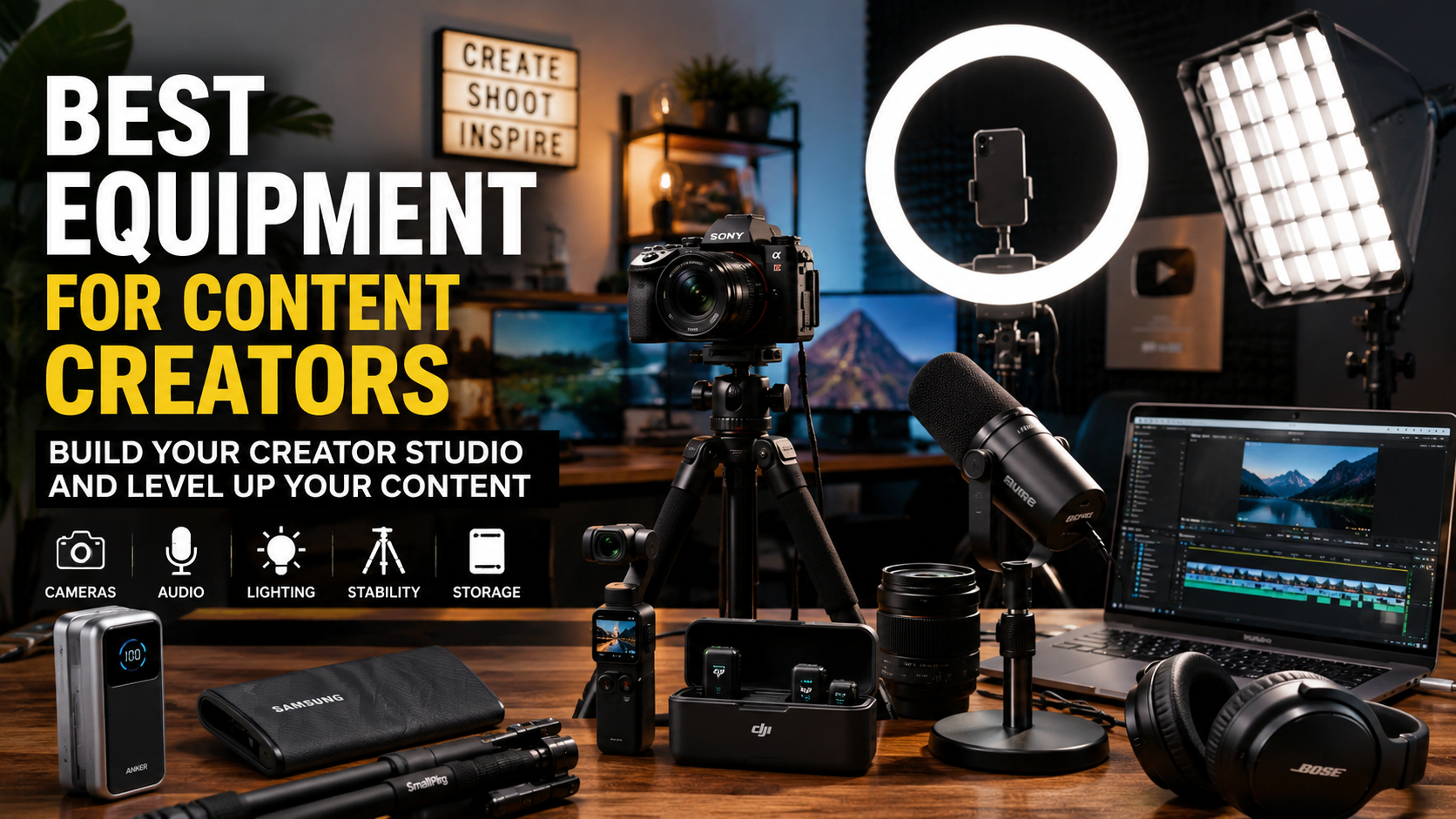
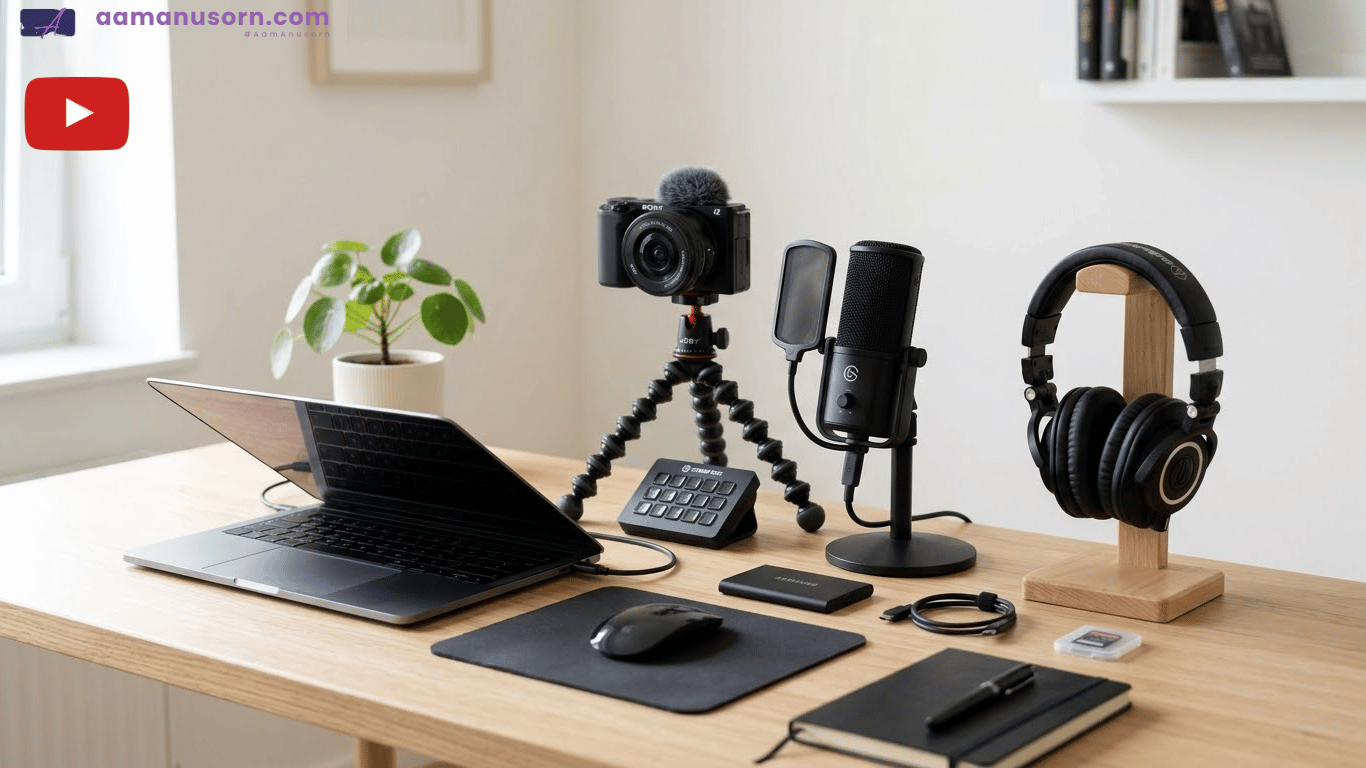
If you are looking for equipment for YouTube and content creation, we have collected some options here:
Looking for YouTube and Content Creator Gear?
Browse YouTuber & Creator EquipmentHow Should You Start If You Want to Become a YouTuber in 2027?
If your channel has zero watch hours today, staring at the 8,000-hour requirement is not going to move you any closer to it.
10 Hours → 100 Hours → 1,000 Hours
If we had to launch a completely new YouTube channel today, this is the order we would follow:
- Choose your niche and audience clearly. Know who you are creating content for.
- Research topics before making the video. Look at search demand, competitors and content gaps.
- Think about the title and thumbnail before filming. If you cannot explain why someone should click the video, your audience may not understand either.
- Make the video deliver on the promise of the title. Do not create an aggressive title and thumbnail only to give viewers something completely different after they click.
- Use music, images and audio you actually have the right to use. Do not wait until your channel becomes successful before learning about copyright.
- Study your analytics after publishing. Look at CTR, audience retention, watch time and viewer behavior, then use what you learn when deciding what to make next.
Make something → Improve it → Make the next one
YouTube is not a game you win with one video. It is a process of collecting information from every video you publish and learning what your audience actually responds to.
Do Not Let the YouTube 2027 Rules Make You Quit Before You Even Start
Twenty million Shorts views within 90 days still sounds insane, and 8,000 watch hours is literally double the previous requirement.
But the more important question is not simply, “Is YouTube getting harder?” It is: Can we build a channel people genuinely want to come back to?
If your strategy is simply to upload enough videos to unlock monetization and then wait for money to arrive, the new rules may make that path significantly harder.
But if your goal is to build a real audience, learn from data, improve your topics and thumbnails, understand copyright and consistently create things people actually want to watch, becoming a YouTuber does not suddenly become impossible in 2027.
If we had to choose two tools for someone who is serious about YouTube, we would still choose vidIQ for research, strategy and channel analysis and Epidemic Sound for music, sound effects and an easier audio workflow.
Neither tool guarantees that your channel will become successful.
But for us, they make the work feel a lot less like walking around with our eyes closed.
And if YouTube is becoming more competitive, knowing what you are doing may ultimately be more valuable than simply producing the largest possible number of videos.
Frequently Asked Questions About the YouTube 2027 Rules
When does the YouTube 8,000-hour requirement begin?
It begins on February 1, 2027 for new YPP applicants seeking revenue from ads and YouTube Premium. They will need 1,000 subscribers plus 8,000 qualified watch hours within 365 days or 20 million qualified Shorts views within 90 days. Google Help
Does YouTube still use the 4,000-hour requirement in 2026?
Yes. In 2026, the Ads and Premium YPP threshold remains 1,000 subscribers plus 4,000 qualified public watch hours within 12 months or 10 million qualified Shorts views within 90 days. Google Help
Do YouTube Shorts watch hours count toward the 8,000-hour requirement?
No. Watch hours generated from the Shorts Feed do not count toward the qualified long-form watch-hour requirement. Google Help
If I am already in YPP, do I need to reach 8,000 watch hours again?
No. The increased 8,000-hour or 20-million-Shorts threshold is an entry requirement for new applicants. YouTube says existing YPP creators will not have their membership status affected by this change. Google Help
How can vidIQ help YouTubers?
vidIQ offers tools including keyword research, competitor analysis, channel audits, AI Coach, video ideas, titles, descriptions, scripts, thumbnails and trend research. These tools can support research and content planning, but they do not guarantee channel growth. vidIQ
Is music labeled “Copyright Free” automatically safe to use on YouTube?
Not necessarily. YouTube warns that music described as “free” can still be detected by Content ID. What matters is whether you actually have the rights or license required for the way you are using the music. Google Help