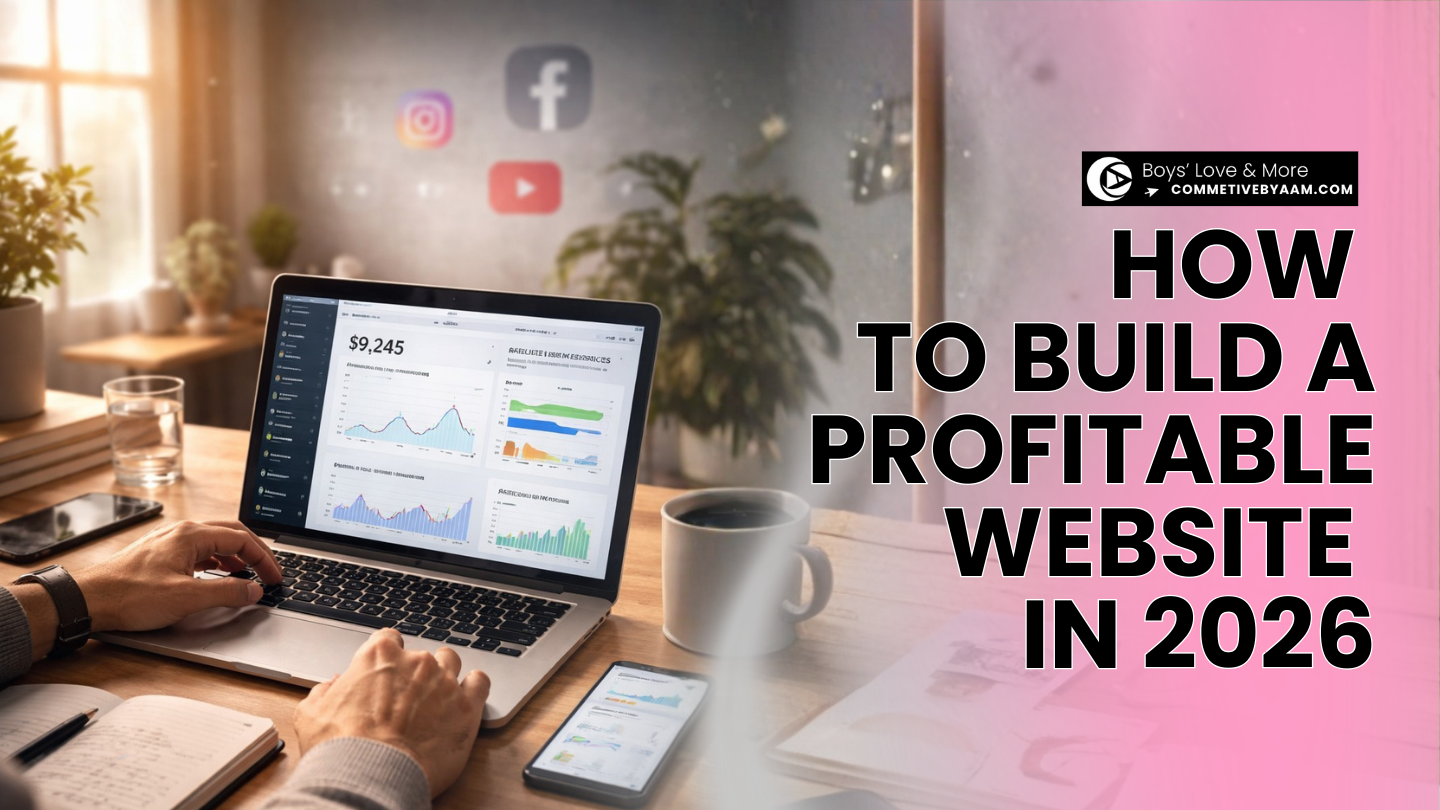

If Instagram cut your reach by 80% tomorrow… would you still make money?
That’s not a dramatic question in 2026. It’s just the reality of building a business on platforms you don’t own.
For years, the formula was simple: post consistently, grow followers, monetize attention. But now organic reach is shrinking, algorithms shift without warning, and your “audience” can disappear overnight because your distribution is rented—not owned.
A website is the opposite.
A website is infrastructure. It’s an asset. It’s a place where your best content keeps working while you sleep—bringing in readers, buyers, and affiliate commissions long after you post it.
The Big Difference: Intent vs. Attention
Social media is built on interruption. People scroll for entertainment, drama, or dopamine. You’re trying to stop them mid-scroll.
A search-optimized website is built on intent. People arrive because they’re actively looking for an answer, a product, or a solution.
Here’s why websites usually convert better:
| Feature | Social Media | Search-Optimized Website |
|---|---|---|
| User mindset | Passive (entertainment) | Active (problem-solving / buying intent) |
| Content lifespan | Hours or days | Months or years (compounding) |
| Monetization | Algorithm-dependent | You control it (affiliate, ads, products, services) |
| Asset value | You rent the space | You build equity you can grow (and sometimes sell) |
A small number of high-intent visitors can outperform huge numbers of casual views—because intent is where money lives.
The 2026 Survival Guide: Winning in the AI Search Era
Search in 2026 isn’t only “Google blue links” anymore. People use AI answers (and AI summaries) constantly. That changes what wins.
To build a site that gets traffic and gets clicks, you need content AI engines want to reference—and humans want to trust.
1) Write for AI visibility (without writing like a robot)
AI tools summarize the web. If you want to be cited, your content must be:
• Structured (clear headings, short sections, bullet points)
• Specific (real examples, practical steps, checklists)
• Original (a personal angle, experience, or data AI can’t copy from everyone else)
A simple trick: add a section called “What Most People Get Wrong” or “My Real Experience” in every article. That’s the part AI can’t fake—and readers love it.
2) Speed is not optional anymore
In 2026, a slow site is basically a closed store.
Make these non-negotiable:
• Mobile-first design
• Lightweight templates
• Compressed images
• Fast hosting
• Clean layout (less clutter = more conversions)
Why Affiliate Marketing Is Still the Easiest
“First Money” Online
You don’t need to create a product on day one.
Affiliate marketing is simple:
You help someone solve a problem → recommend the right tool → earn a commission.
And it scales beautifully when your content ranks in search.
Conservative math (and yes, reality check)
Let’s use a realistic goal scenario:
• Monthly high-intent traffic: 30,000 visitors
• Conversion rate: 2% (600 sales)
• Average commission: $15
• Total: $9,000/month ($108,000/year)
Now the reality check: you don’t start there.

Most people begin with 300–3,000 visitors/month and build up. But the logic stays the same—and the asset compounds.
Even a smaller early scenario can be meaningful:
• 3,000 visitors/month
• 1% conversion (30 sales)
• $15 commission
• $450/month (while you’re still growing)
Also: if you promote subscription tools with recurring commissions (often around 20%–40% depending on the program), your income can stack month after month.
The “Profitable Website”
Checklist (Steal This)
Before you obsess over aesthetics, build the machine:
✅ A clear niche (one audience, one problem)
✅ 15–30 strong articles answering high-intent searches
✅ Comparison tables and “best tools” pages (these convert)
✅ Email capture (even simple: “Get my free checklist”)
✅ Clear CTAs (tell people what to do next)
✅ Fast mobile performance
✅ Trust signals (About page, contact, real voice, disclaimers)
If you build these pieces, you’re not “posting content.”
You’re building a system.
Choosing Your Platform (Start Here)
Your platform affects speed, SEO, and how quickly you can publish consistently.
1) Wix — best for beginners who want speed + simplicity
Great if you want to build quickly without touching code and focus on publishing content consistently.

2) Squarespace — best for premium creators, consultants, and service brands
If your business sells expertise (consulting, coaching, creative services), Squarespace helps you look expensive fast.

3) Shopify — best if your end goal is selling products
If you want physical products, bundles, merch, or a serious store experience—Shopify is built for that.

Let’s me compare in easy way…
| Feature | Wix | Squarespace | Shopify |
|---|---|---|---|
| Best for | Beginners who want a fast all-in-one website builder | Creators & service brands who want premium design quickly | Serious e-commerce (products, inventory, checkout) |
| Setup difficulty | Easy | Easy | Medium (more store settings) |
| Design quality | Flexible templates, lots of customization | Strong “premium” aesthetics out of the box | Store-focused themes; great for product pages |
| SEO & content | Good for blogging + SEO basics; solid for most creators | Good SEO basics + clean structure; great for portfolios/services | SEO is strong for product pages; blogging is okay but not the main focus |
| E-commerce | Good for simple stores & digital products | Good for small-to-mid stores | Best-in-class for selling products |
| Apps & integrations | Wix App Market (lots of add-ons) | Extensions (smaller ecosystem) | Huge App Store + integrations |
| Scaling | Great for content sites; scaling stores is okay | Great for brand sites; scaling stores is decent | Built to scale stores (catalog, fulfillment, analytics) |
| Ideal monetization | Affiliate + ads + digital products + services | Services + consulting + premium brand offers | Physical products + subscriptions + upsells |
| My quick pick | Best “start now” choice for content + affiliate sites | Best for premium personal brand & credibility | Best if your goal is selling products seriously |
A Realistic 12-Month Roadmap (So You Don’t Quit Too Early)
This is the part nobody likes hearing, but it’s the truth:
Months 1–2: Foundation
• Pick a niche + define your audience
• Do keyword research (focus on buyer intent)
• Publish 15–20 deep, helpful articles
Months 3–6: The Grind
Traffic may feel disappointing. That’s normal. Search engines are testing your consistency and trust.
Your job: publish, improve, and keep going.
Months 7–9: Traction
You’ll start seeing:
• first-page rankings
• early affiliate commissions
• repeat visitors
Now add:
• email capture
• comparison tables
• internal linking between your articles
Months 10–12: Scaling
• Update your best pages (refresh wins)
• Add “best tools” + “X vs Y” pages
• Expand into related keywords
• Apply for better ad networks (if traffic supports it)
| Timeframe | Phase | What You Do | What You’ll Notice |
|---|---|---|---|
| Months 1–2 | Foundation |
|
You’re building the base. Traffic is usually low at first — that’s normal. |
| Months 3–6 | The Grind |
|
Traffic may feel disappointing.
Search engines are testing your consistency and trust. Don’t quit here.
|
| Months 7–9 | Traction |
|
You’ll start seeing:
|
| Months 10–12 | Scaling |
|
Momentum builds. You’re optimizing what works and turning content into a system. |
Virality creates spikes.
Infrastructure creates stability.
In 2026, the smartest creators are doing one thing:
they stop renting attention and start building assets.
If you’re tired of chasing algorithms, build a website that compounds.