In 1970s Japan, a radical collective of women began sketching “hidden” manga stories—subversive tales of male-male romance often tucked under mattresses or traded in secretive, ink-stained circles.
Fast forward to today, and that underground whisper has become a global roar. Thai Boys’ Love actors are no longer hiding; they are shutting down Paris Fashion Week, draped in Dior and Prada, and surrounded by thousands of fans whose economic power has forced luxury houses to rethink their celebrity strategies.
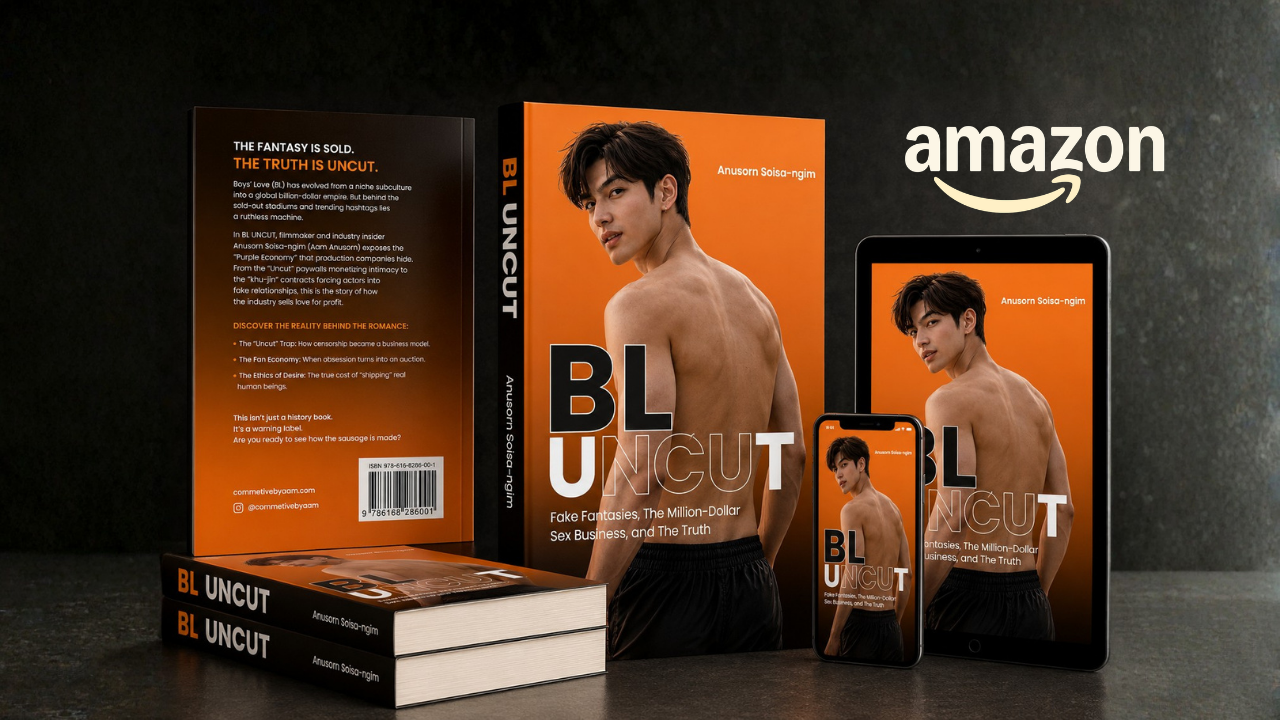
Welcome to the “Purple Economy.” As explored in the investigative work BL UNCUT, this is a multi-billion-dollar media ecosystem centered on romantic and erotic relationships between male characters, historically shaped by female creators and supported by an intensely loyal audience.
It is a world where “imagined couples” can move mountains of merchandise and streaming platforms can use censorship, exclusivity, and international distribution rules to profit from content once considered forbidden.
But how did a female-driven subculture—once dismissed as a “rotten” niche—transform into one of the most profitable and contradictory media ecosystems on the planet?
To understand the Purple Economy, we must look beyond the shimmering, soft-focus exterior and examine how the industry is actually built.
1. The Gender Hack: A “Technology of Safety” for Female Desire
The origins of BL were never entirely about the boys on the page. They were also a tactical response to the social restrictions placed on women.
During the 1970s, a revolutionary collective of female manga artists known as the Year 24 Group challenged the expectations of a Japanese society that often demanded women appear passive, innocent, and sexually restrained.
By replacing the traditional female protagonist with a Bishōnen—a beautiful, emotionally expressive young man—creators developed what could be described as a “Technology of Safety.”
In a culture where women’s sexuality was heavily policed and politicized, male characters became a more neutral canvas. This allowed female creators and readers to explore sex, power, vulnerability, ambition, and emotional intimacy without carrying the same burden of real-world gender inequality.
BL and Bara are not the same genre.
Bara, sometimes called Gei Comi, has historically been created mainly by gay men for gay male audiences and frequently emphasizes masculine or physically realistic bodies.
BL, by contrast, developed primarily through the female gaze. Its male characters have often been depicted as youthful, slender, beautiful, emotionally vulnerable, and removed from conventional masculine expectations.
“The boy is a vessel for the girl’s soul.”
Within this imaginative space, readers can project themselves into romantic relationships separated from pregnancy, reproductive expectations, domestic obligations, and the traditional gender roles often attached to heterosexual romance.
2. The Golden Handcuffs: Harvesting Souls for the “Khu-Jin” Brand
Behind carefully curated Instagram photographs and staged public “dates” lies one of the Thai BL industry’s most powerful marketing systems: the Khu-Jin, or “imaginary couple.”
Actors are paired together as branded romantic partners and encouraged—or contractually pressured—to extend their fictional chemistry into interviews, fan meetings, livestreams, advertisements, and public appearances.
These arrangements can become “Golden Handcuffs”: commercially rewarding partnerships that simultaneously limit the actors’ freedom, privacy, career choices, and personal relationships.
The industry does not simply sell fictional romance. It may also turn the actors’ private lives, personalities, friendships, and emotional boundaries into commercial products.
- Long-Term Contracts: Young and inexperienced actors may sign agreements lasting five to seven years, with agencies controlling large percentages of their earnings and public activities.
- The 16-Hour Grind: Productions may involve extremely long shooting days, promotional schedules, live appearances, rehearsals, and “chemistry workshops” designed to make physical intimacy appear effortless on camera.
- The Sasaeng Threat: Obsessive stalkers may attempt to access private flight information, follow actors to their homes, or rent nearby properties. Their behavior can be tolerated or inadequately addressed when they are also major spenders.
When audiences consume the “perfect couple” displayed on billboards and social media, they may also be consuming a commercial fantasy built at the expense of young performers’ privacy, identity, and psychological well-being.
3. Monetizing the Forbidden: The “Uncut” Paywall and the Economy of Thirst
The industry has mastered the freemium model, using censorship, exclusivity, and fan anticipation to transform desire into recurring revenue.
Streaming platforms may release edited versions of episodes on free television or YouTube while reserving extended romantic or sexual scenes for paid subscribers.
When tension reaches its peak, the camera may suddenly move toward a lamp, curtain, ceiling, or conveniently positioned object—signaling that the full “NC,” or mature, scene is available only in the uncut version.
The “Uncut Paywall” transforms intimacy into a premium commodity.
This economic model extends far beyond streaming subscriptions. Brands organize “Top Spender” campaigns in which fans compete for brief moments of proximity to actors.
Fans may be encouraged to purchase enormous quantities of snacks, cosmetics, household products, insurance packages, financial services, or other goods in exchange for a short dinner, photograph, video call, autograph, or one-second “Hi-Touch.”
Within this system, fan devotion becomes an extractive commercial resource—and emotional access becomes something that can be bought by the highest spender.
4. Regional Mutations: From “Series Y” to the Digital Underground
Although the genre shares common cultural DNA, BL has evolved into distinct regional forms shaped by local entertainment systems, censorship rules, budgets, social attitudes, and audience expectations.
| Region | Style Name | The “Uncut” Truth | Notable Titles |
|---|---|---|---|
| Thailand | Series Y | Highly commercial, idol-driven productions frequently shaped by university, engineering, fashion, advertising, and couple-branding aesthetics. | SOTUS, 2gether |
| Japan | Prestige BL | Cinematic and character-driven stories that may focus on adult routines, emotional restraint, work, food, aging, and ordinary relationships. | Old Fashion Cupcake, What Did You Eat Yesterday? |
| South Korea | The Idol Pipeline | Polished, visually controlled productions that can provide career opportunities for actors and struggling or former K-Pop idols. | Semantic Error |
| Taiwan | The Activist Bridge | Stories that often connect romantic fantasy with LGBTQ+ visibility, political identity, social recognition, and real-world legal progress. | HIStory, Your Name Engraved Herein |
| Philippines | Indie/Zoom | Raw, emotionally direct, and digitally driven productions that expanded during lockdown through webcam and mobile-screen storytelling. | Gameboys |
| Vietnam | The Wild West | Independent productions with unpredictable “grindhouse” energy, combining romance with ghosts, crime, mafia plots, melodrama, and horror. | Tien Bromance |
5. From “Rotten Girls” to a Global Powerhouse: The Call for Ethics
The term Fujoshi, often translated as “Rotten Girl,” has evolved from an insult into a self-claimed identity representing one of the most influential economic audiences in Asian popular culture.
However, as the genre matures, the industry can no longer hide behind the excuse that “it is only fantasy.” Fantasy may be fictional, but the labor, contracts, bodies, mental health, and financial systems behind it are real.
For BL to survive its own rapid success, the digital underground must evolve into a more ethical and sustainable ecosystem.
As filmmaker Aam Anusorn argues in BL UNCUT, audiences and industry professionals must demand:
- Labor Protections: Humane working hours, transparent contracts, safe working conditions, and fair compensation reflecting the value performers and crews generate.
- Intimacy Coordinators: Trained professionals who establish consent, boundaries, choreography, and communication during intimate scenes.
- The End of “Dub-Con” as an Easy Shortcut: A move away from romanticizing dubious consent, coercion, and rape-culture tropes toward more mature portrayals of communication and consensual desire.
The Warning Label We All Need to Read
The Boys’ Love industry is a mirror reflecting female desire, capitalist hunger, celebrity culture, and the universal human need for connection in an increasingly lonely world.
It can offer comfort, fantasy, community, and emotional escape—but that fantasy may also come with a significant human cost.
THE TRUTH IS UNCUT.
If you are a fan, media student, creator, or entertainment professional, you can no longer afford to ignore the human realities behind the shimmer.
Understanding the Purple Economy is not optional for anyone trying to understand the future of modern pop culture.
BL UNCUT is not simply a history book. It is an examination of the genre’s contradictions—and a warning label for the industry’s future.
Read BL UNCUT on Amazon Direct Amazon LinkDisclosure: This page contains an Amazon affiliate link. COMMETIVE By Aam may earn a commission from qualifying purchases at no additional cost to you.
Can the industry evolve to respect its storytellers as much as audiences love the stories?