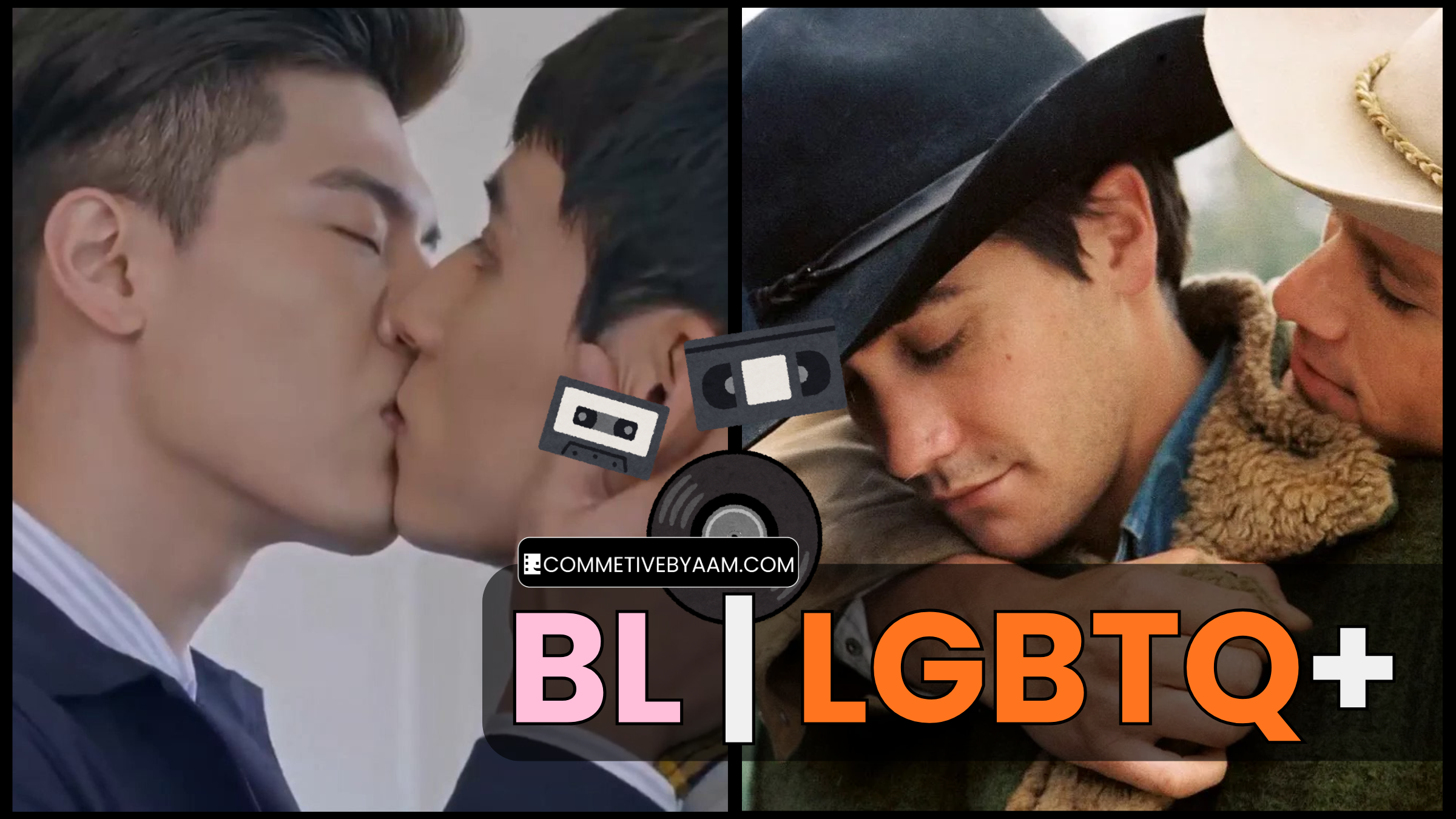

When people talk about queer stories on screen, two labels pop up a lot: BL (Boys’ Love) and LGBTQ+ media. Sometimes they get mixed together, and sometimes they’re treated like totally separate planets.
As a filmmaker and a fan, I wanted to try to untangle that—especially regarding movies and series—because while they often look similar on the surface, they come from very different worlds.
What is BL, really?
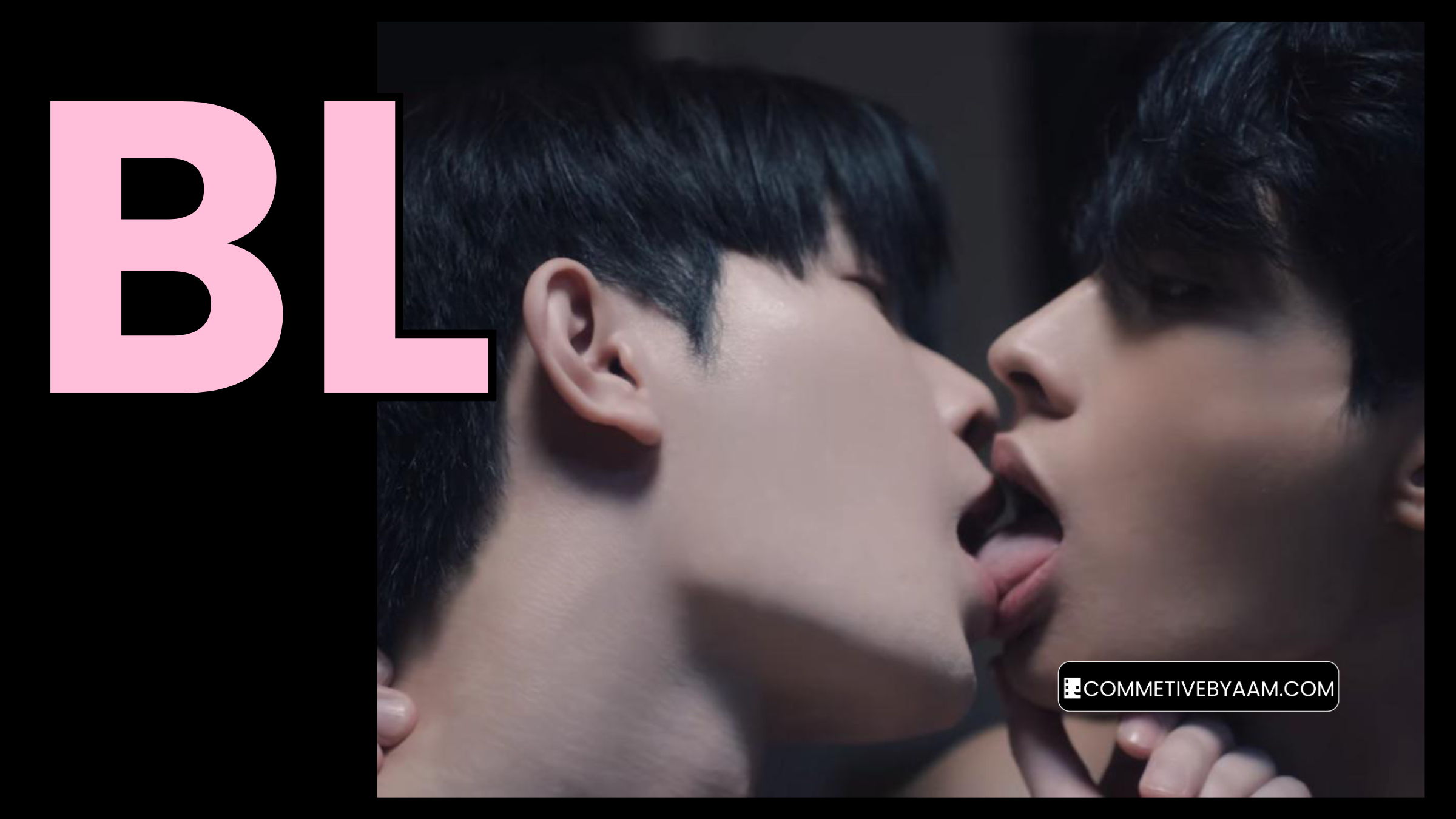
BL (Boys’ Love) is a commercial genre that started in Japan and spread across Asia. Its primary focus is the romantic and emotional relationship between male characters.
To understand BL, you have to look at its DNA:
Origin: It started in Japanese manga and anime in the 1970s as a subgenre of shōjo (girls’) comics.
Creators & Audience: Traditionally, it is created by women for a mainly female audience. This is a key distinction from gay media made specifically for gay men.
The Vibe: The focus is usually on romance and feelings, often stylized or idealized. Think campus love, enemies-to-lovers, or "fake dating" tropes.
Archetypes: Classic BL often uses clear roles like seme/uke (the pursuer and the pursued) and features very attractive, often androgynous male characters.
In live-action, we see this explode in Asian dramas. For example, Thailand's 2gether: The Series is literally marketed as a romantic comedy about two college boys who fake-date and fall in love.
The Bottom Line: BL is a genre label, not an identity label. It tells you about the style and market of the story: male–male romance that is often soft, cute, and escapist.
WTH is LGBTQ+ media?
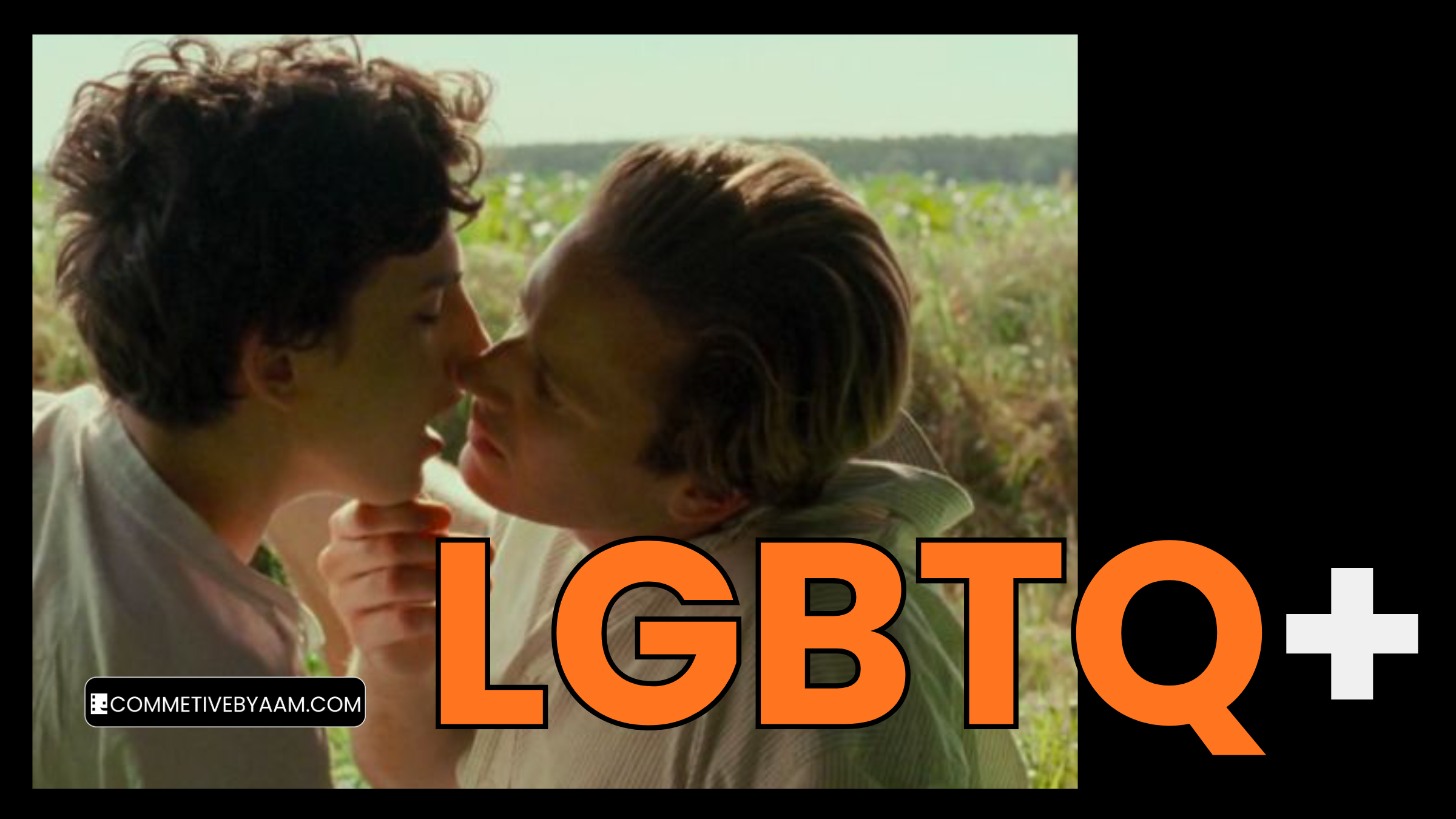
When people say LGBTQ+ film/series, they are usually talking about works where characters are clearly lesbian, gay, bi, trans, or queer, and that identity is treated as a meaningful part of the story.
LGBTQ+ media isn’t really a "genre"—it’s an umbrella for stories about queer lives across any genre (romance, horror, sci-fi, documentary). Historically, queer characters were invisible or villains; recently, we’ve seen complex, sympathetic portrayals.
These stories tend to focus on:
Identity and labels: Exploring what it means to be gay, lesbian, trans, non-binary, etc.
Social context: Dealing with homophobia, family rejection, chosen family, and activism.
Intersectionality: How race, class, and religion mix with queerness.
The Bottom Line: LGBTQ+ media is identity-focused. It is often political, social, or realistic, rather than purely romantic fantasy.
Divergence: Where they split
Here is a quick breakdown of where the "gap" between the two really shows:
| Feature | Boys' Love (BL) | LGBTQ+ Media |
|---|---|---|
| Primary Goal | Romance & Fantasy. The engine is the couple's relationship development. | Identity & Experience. The engine is the lived reality of being queer. |
| Target Audience | Historically Straight Women (though the fanbase is diversifying). | Historically Queer People (for visibility and representation). |
| Tone | Idealized. Often a "softened" world where love conquers all. | Grounded. Often deals with trauma, politics, and societal struggle. |
| Scope | Mostly Cisgender Men (M/M). | The full spectrum: L, G, B, T, Q, I, A+. |
| Key Conflict | "Will they or won't they?" (Romantic tension). | "Who am I?" or "How do I survive?" (Internal/External conflict). |
Target audience & intention
BL: Built as genre entertainment, historically aimed at a mostly straight female audience, even though queer viewers also watch it. The goal is often emotional fantasy and romance.
LGBTQ+ media: Often created by and/or for queer people and framed around visibility, representation, and lived experience. It might still be fun and romantic, but it usually cares about what it says about real queer lives.
Relationship to identity and labels
Many BL stories avoid using words like “gay” or “bisexual” or barely talk about sexuality beyond “I just like this one person.”
LGBTQ+ works tend to name the identity and explore what it means—coming out, internal conflict, community, etc.
This doesn’t mean BL can’t be meaningful to queer viewers, but the framework is different.
Realism and social context
BL: Often takes place in a kind of “softened” world where homophobia is downplayed or only used for drama spikes. The main focus is the couple and their feelings.
LGBTQ+ cinema/TV: More likely to directly deal with homophobia, transphobia, AIDS, discrimination, activism, and trauma, alongside joy and love. “Moonlight” and “Pose” both embed queer love inside a very real world with racism, poverty, and the AIDS crisis.
Range of identities
BL: Mostly cis male–male relationships. There are some spin-offs and side couples (like yuri/female-female in some shows), but the main label is narrow.
LGBTQ+ media: Covers lesbian, gay, bi, trans, nonbinary, intersex, ace, etc. It still has gaps and biases (gay men are overrepresented, trans and bi people still underrepresented), but the scope is wider.
Why BL Fans End Up Needing a VPN (How ExpressVPN, NordVPN, and Surfshark Compare)
The grey area: where BL and LGBTQ+ overlap
Reality is messy, so:
Some BL is created by queer writers and feels very grounded.
Some LGBTQ+ films are marketed as prestige romance, but still use tropes similar to BL or yaoi fan culture.
A few newer BL dramas start dealing more directly with coming out, queer community, or internalized homophobia, blurring the lines between “BL” and what people would call “LGBTQ+ drama.”
Also, critiques go both ways:
BL is sometimes criticized for fetishizing gay men and ignoring queer politics.
Mainstream LGBTQ+ media gets called out for token characters with shallow development, just there so a platform can tick a diversity box.
So it’s not that one label is “pure” and the other is “fake.” They just come from different histories and industry logics.
BL vs LGBTQ+ media
BL series (and link to watch)
These are typically marketed and received as BL:
2gether: The Series (Thailand) – College guy asks a popular guitarist to be his fake boyfriend to scare away an admirer; the fake relationship slowly becomes real. Watch Now!
Semantic Error (South Korea) – A rigid computer science student clashes with an arts student over a project; enemies-to-lovers on campus, often cited as a breakthrough Korean BL. Click to watch.
Cherry Magic! Thirty Years of Virginity Can Make You a Wizard?! (Japan) – A shy office worker can suddenly read minds, and finds out his handsome coworker is in love with him; originally a BL manga, now live-action/anime. Watch Now.
Bad Buddy (Thailand) – Two boys from rival families, always competing, slowly realize their rivalry has always been attraction. Explicitly described as a romantic BL series. Click to watch.
HIStory3: Trapped (Taiwan) – A police detective and a mafia boss stuck in a tense relationship that turns into romance; marketed and discussed as a Taiwanese BL series. Watch now.
LGBTQ+ movies/series (also with link to watch)
These are usually framed as LGBTQ+ cinema or queer TV, not “BL”:
Heartstopper (UK, Netflix) – A sweet coming-of-age series where Charlie, an openly gay teen, falls for Nick, the seemingly straight rugby player in his class; also features lesbian, bi, and trans characters. Click
Moonlight (USA) – Follows Chiron from childhood to adulthood as he navigates Black masculinity, poverty, and his attraction to another boy in Miami. Watch now…
Paris Is Burning (USA) – Documentary about New York ballroom culture and the Black and Latinx queer and trans people who built it. Click to watch.
Pose (USA, FX/Netflix) – Drama series inspired by that ballroom world, centering trans women and gay men of color living with HIV/AIDS and building chosen family in the 80s–90s. Watch Now
Love, Simon (USA) – Teen film about a closeted boy trying to figure out his sexuality and the anonymous classmate he’s fallen for online, widely discussed as a mainstream gay coming-of-age movie. Watch now.
So here what I think …
For me personally, I don’t actually care that much about whether people call my work BL or LGBTQ+. When I’m writing or shaping a story, I’m not sitting there thinking, “Okay, this character is gay, now I must follow this rulebook.”
I just see people, with feelings, contradictions, and messy lives. I’m not consciously thinking about gender all the time, and I genuinely don’t understand why we’re supposed to care so much about fitting into a label before we can even talk about the story itself.
But at the same time, once my work is out in the world, I keep running into this big gap in how people talk about BL vs LGBTQ+ media—what’s “for fans,” what’s “serious representation,” who’s allowed to tell what kind of story. That gap is exactly why I wrote this article: not to pick a side, but to lay out where these labels come from, how they differ, and then quietly say: